
How to Move a Washer and Dryer (Transit Bolts Guide)
How much will my move cost?
Let us help match you
Thank you!
Your movers will contact you shortly.

Written by: All Movers Team
AllMovers team provides expert insights, mover comparisons, and practical resources to help you make informed moving decisions. Whether you need company reviews, relocation tips, or expert guidance, we’ve got you covered. Read more
Reviewed by: Jason Walker
Jason Walker is a moving expert with personal and professional experience, sharing tips, guides, and reviews to make your relocation stress-free. Read more
Last Update: 05/03/2026
You know what? There is a specific sound that haunts my nightmares.
It’s the sound of a washing machine drum banging against the side of the metal casing – thud, thud, thud – as a moving truck hits a pothole.
I heard that sound years ago when I was helping a college buddy move out of his apartment in Houston. We were young, broke, and convinced we didn’t need to read the manual. We just unplugged the washer, bear-hugged it onto the truck, and drove off. When we plugged it in at the new place, it shook so violently it nearly walked itself out the front door. We had broken the suspension.
That was a $600 mistake.
Now, working in logistics and writing for All Movers, I know exactly what went wrong. We ignored the physics. A washing machine isn’t just a heavy box; it’s a delicate piece of machinery featuring a heavy concrete counterweight suspended by springs. If you don’t lock that mechanism down, moving day turns into “buy a new appliance” day.
My sister Megan, the photographer, recently moved her studio (and her massive laundry setup) for the tenth time. She called me in a panic because she couldn’t find her “shipping bolts.” If you’re also moving a mattress at the same time, read our mattress moving guide – same principle of prep-first applies. We spent two hours turning her garage upside down to find them. Why? Because she knows the rule: No bolts, no move.
If you are staring at your laundry room wondering how to move a washer and dryer without flooding your house or destroying the machines, grab a coffee. We need to talk about transit bolts, water valves, and why gravity is your enemy.
- Transit bolts are mandatory: For front-loaders, moving without them voids the warranty and usually breaks the machine.
- Water weighs a lot: Drain every drop from the hoses and the internal pump before lifting.
- Keep them upright: Never lay a washer on its side; it messes up the oil in the motor and the suspension springs.
- Gas dryers are dangerous: If you aren’t 100% comfortable with gas lines, hire a plumber to disconnect it. For everything else the movers will handle, see what appliance moving services actually cover.
- Plan the path: Measure your doorways before you have a 200-pound appliance on a dolly. Our new house moving checklist has a doorway measurement section worth going through first.
Most Recommended Mover for 2026 Most Recommended Mover for 2026


- Nationwide moving support
- Clear estimates, no hidden fees
- One team manages every stage
Need Help? Call Now
800-457-0021- Nationwide moving support, clear estimates & no hidden fees, one team for every stage
Fast Response Guaranteed Fast Response Guaranteed

- Long-distance moving expertise
- Value-focused pricing approach
- Proven moving industry experience
Call for a Free Quote
888-450-9884- Long-distance moving expertise, value-focused pricing, proven industry experience

- Reliable moving & Storage solutions
- Top-quality services, trained staff
- Reliable moving & storage solutions, top-quality services, trained staff
Why Moving a Washer and Dryer Is Tricky
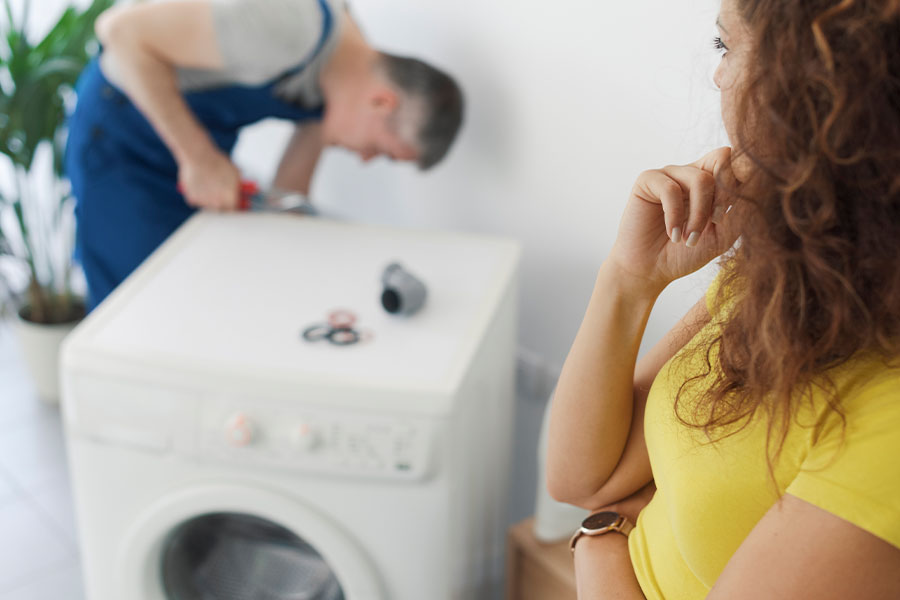
Here is the thing about appliances: they look tough. They are big metal squares. But inside? They are surprisingly sensitive.
A washing machine is basically a tub inside a tub. The inner tub spins at high speeds, so it floats on a suspension system (springs and dampers) to absorb the vibration. When the machine is sitting still in your laundry room, gravity keeps it stable.
But when you put it on a moving truck, you are introducing G-forces. Bumps, turns, and stops cause that heavy inner drum to swing wildly. Without protection, it acts like a wrecking ball inside the cabinet, smashing the motor, the sensors, and the pump.
Dryers are simpler – basically a tumbling can with a heater – but they are bulky and dent easily. Plus, moving a washer and dryer involves water and potentially gas, adding a layer of “don’t flood the house” anxiety to the mix.
What You Need Before Moving Your Washer and Dryer
Don’t start pulling hoses until you have your gear ready. For a broader packing supplies list, see our packing tips guide. I’ve seen people trying to catch water in a Tupperware container because they didn’t have a bucket. It’s messy.
Tools & Supplies
- Transit Bolts (Shipping Bolts): These usually come with the machine. If you threw them away (most people do), you need to buy a replacement set specific to your model.
- Appliance Dolly: Not a regular hand truck. You want the wide one with straps.
- Slip-Joint Pliers or Wrench: To disconnect the water hoses.
- Bucket and Old Towels: There will be water.
- Moving Blankets: To prevent scratches and dents.
- Packing Tape or Shrink Wrap: To keep the doors closed and cords secure.
- Rope or Ratchet Straps: To secure the appliances in the truck.
- Create a “Parts Bag”: A Ziploc bag for the screws, knobs, and manual. Tape this to the side of the machine so you don’t lose it.
Step-by-Step: How to Move a Washing Machine
Okay, let’s get into the logistics. This is the heavy lifting part. How to move a washing machine correctly is 80% preparation and 20% perspiration.
Get matched with the best mover for your needs!
Thank you!
Your movers will contact you shortly.
Step-by-Step: How to Move a Dryer
Learning how to move a dryer is slightly easier because they are lighter (no concrete weight inside), but they are awkward. If you’re doing this as part of a full DIY move, compare your options first in our truck rental vs. movers guide.
1. Unplug and Prepare the Dryer
If it’s electric, unplug the thick 240V cord. Warning: If it is hardwired into the wall (rare, but happens in older homes), you need an electrician to disconnect it. Do not cut wires.
2. Disconnect the Vent Hose
Pull the dryer away from the wall. You will see a silver foil tube.
- Loosen the clamp with a screwdriver.
- Pull the vent off.
- Opportunity: Look inside that vent. Is it full of lint? Throw it away. Seriously. A dirty vent is a fire hazard. Buy a new one for $15 at the new house.
3. Wrap and Strap the Dryer
Just like the washer, tape the door shut. Wrap it in blankets. Dryers have thin metal sides that dent if you look at them wrong.
4. Load Into the Truck
Dryers can usually be moved with a standard hand truck if they aren’t too heavy, but an appliance dolly is safer. Keep it upright.
Gas Dryers: Special Safety Notes
I live in Nashville now, where electric dryers are common, but back in Chicago, everyone had gas.
Moving a gas dryer is serious business.
- Turn off the gas valve: There should be a valve on the gas line right behind the dryer. Turn it until the handle is perpendicular to the pipe (off position).
- Disconnect the flex line: Use a wrench. It might be stuck tight.
- Cap the line: Even if the valve is off, I recommend buying a gas cap for the open pipe on the wall, just to be safe.
- Smell check: If you smell rotten eggs at any point, open the windows, get everyone out, and call the gas company.
My verdict: If you are not handy, hire a plumber to disconnect the gas. It costs a bit, but it’s cheaper than an explosion.
Do You Really Need Transit Bolts?
Honestly? Yes.
I get this question all the time. “Jason, I’m only moving 10 miles. Do I really need the bolts?”
Can Movers Handle Washers and Dryers?
If you are hiring pros (and you can find great ones in our reviews directory), they can definitely move the units. But there are limits.
What Professional Appliance Movers Do
They will wrap, load, transport, and unload the machines safely. They have the heavy-duty dollies and the ramp skills to get a 250-pound washer down a flight of stairs without scratching your hardwood floors.
What You Should Confirm Before Hiring
Most moving companies will not disconnect water or gas lines — it’s a liability issue. This is also why it matters whether you’re hiring a carrier or a broker:
brokers hand your job off and can’t guarantee what the crew will or won’t do. If a valve leaks after they leave, they don’t want to be sued for water damage.
- You need to: Disconnect everything and install the transit bolts yourself before the crew arrives. Confirm the mover is licensed — here’s how to verify their USDOT number before you sign anything.
- Ask about third-party services: Some movers partner with technicians who can come in and do the disconnect/reconnect for a fee.
Planning a move? Find the perfect mover to match your needs and make your relocation stress-free!
877-792-7972Tips for Reinstalling the Washer and Dryer
You’ve made it to the new house. The coffee pot is found. Time to wash the moving clothes.
- Remove the Transit Bolts: Do not forget this. Put them back in a bag and tape them to the back of the machine for the next move. Then work through your new house checklist before you run the first load.
- Level the Legs: Your new floor isn’t perfectly flat. Use a bubble level on top of the washer. Twist the little feet on the bottom until the bubble is centered. An unlevel washer will “walk” across the room.
- Check for Leaks: Connect the water, turn it on, and sit there for the first cycle. Watch the connections like a hawk.
- Dryer Vent: Make sure the vent hose isn’t crushed behind the dryer. A crushed vent causes the dryer to overheat and can start a fire.
Common Mistakes to Avoid
- Forgetting the bolts: (I’ve said it five times because it’s that important).
- Laying the washer on its side: This causes oil from the motor to flow into places it shouldn’t be. Keep it upright.
- Leaving water in the hoses: It freezes in winter or leaks in the truck.
- Dragging the feet: The rubber feet on the bottom of the washer will rip your linoleum or scratch your wood floors. Lift it or use sliders.
Look, moving appliances is a pain. It’s heavy, wet, and stressful. But my dad, the engineer, always said, “Do it right, or do it twice.” When it comes to moving a washer, doing it twice means buying a new machine.
Take the time to find those bolts (or order them online for $20). Drain the water properly. Save your back.
And if you look at your laundry room and think, “There is no way I’m lifting that,” don’t be a hero. Check out All Movers to find a crew that can handle the heavy lifting for you. And if you’re moving as part of a larger downsizing, our senior downsizing guide covers how to handle appliances in that context. Your back – and your washing machine – will thank you.
Let’s get moving!
Frequently Asked Questions (FAQ)
Do I need transit bolts to move my washer?
For front-loading washers, yes, they are essential. Without them, the suspended drum can swing violently during transport, damaging the internal motor and suspension. For top-loaders, check your manual; some require a styrofoam block or a different locking mechanism.
Can I order replacement transit bolts?
Yes! If you lost the originals (which happens to everyone), search for your washing machine’s model number + “shipping bolts” on Amazon or appliance parts websites. They usually cost between $15 and $30.
Can I lay a washer on its side?
No. You should always keep a washing machine upright. Laying it on its side can cause the tub to bang against the casing, and it can cause motor oil or residual water to drain into delicate electrical components.
Can movers disconnect gas dryers?
Generally, no. Most standard moving companies are not licensed to touch gas lines due to liability and safety regulations. You will likely need to hire a licensed plumber or contact your gas utility company to handle the disconnection. For everything else, use our moving cost calculator to budget for the extra service call.
Can I move a dryer without removing the vent?
It is not recommended. The vent hose is usually made of thin foil that crushes easily. It’s better to remove it, compress it, and pack it in a box (or throw it away and buy a clean one). Moving the dryer with the vent attached usually results in the vent getting ripped off anyway.