
How Much Does It Cost To Move a Mobile Home? What You Need to Know
How much will my move cost?
Let us help match you
Thank you!
Your movers will contact you shortly.

Written by: All Movers Team
AllMovers team provides expert insights, mover comparisons, and practical resources to help you make informed moving decisions. Whether you need company reviews, relocation tips, or expert guidance, we’ve got you covered. Read more
Reviewed by: Sarah Mitchell
Meet Sarah Mitchell of All Movers: logistics pro, moving expert, and your go-to guide for stress-free tips, smart packing hacks, and honest advice.Read more
Last Update: 06/02/2026
I’ve talked to a lot of people who got a quote for moving their mobile home, felt good about it, and then watched the final bill come in at nearly double. It happens more than you’d think. Not because the movers are dishonest – usually – but because manufactured home transport has more moving parts than a standard household move, and most estimates don’t cover all of them upfront.
Moving a mobile home costs $5,000–$8,000 for a single-wide and $8,000–$15,000 for a double-wide for most moves under 100 miles. Transport-only quotes start around $1,000–$3,500, but that number rarely reflects what you’ll actually pay once permits, escort vehicles, utility disconnection, and setup are factored in. Triple-wide homes regularly run $15,000–$20,000 or more. Pre-1976 homes may not be legally moveable at all.
A quick note on terminology: “mobile home” and “manufactured home” get used interchangeably here, but they’re technically different. Homes built before June 15, 1976 are legally mobile homes.
Anything built after that date is a manufactured home under HUD’s Manufactured Home Construction and Safety Standards. The distinction matters more than people realize – and it directly affects whether your home can be moved and where it can go.
If you’re trying to figure out whether the move even makes financial sense, or you’re calling around for quotes and not sure what to ask, this guide covers the real numbers.
Not just the ranges you’ll find everywhere else, but the specific factors that actually shift the manufactured home moving cost – some of which almost never make it into articles like this one.
- A single-wide move under 50 miles costs roughly $3,000–$5,000 for transport-only and $5,000–$8,000 full-service. A double-wide runs $8,000–$15,000 full-service.
- Per-mile rates ($4–$5.50 for the tow vehicle) don’t capture the real cost. Site access, oversize permits, and road routing often matter more than raw distance.
- Homes built before 1976 are frequently unmoveable under current regulations – many parks won’t accept them regardless of condition.
- Every state requires a licensed manufactured home mover. A general towing company cannot legally transport a manufactured home.
- Before calling for quotes, estimate your moving budget to know what you’re working with before negotiations start.
Most Recommended Mover for 2026 Most Recommended Mover for 2026


- Nationwide moving support
- Clear estimates, no hidden fees
- One team manages every stage
Need Help? Call Now
800-457-0021- Nationwide moving support, clear estimates & no hidden fees, one team for every stage
Fast Response Guaranteed Fast Response Guaranteed

- Long-distance moving expertise
- Value-focused pricing approach
- Proven moving industry experience
Call for a Free Quote
888-450-9884- Long-distance moving expertise, value-focused pricing, proven industry experience

- Reliable moving & Storage solutions
- Top-quality services, trained staff
- Reliable moving & storage solutions, top-quality services, trained staff
What Moving a Mobile Home Actually Costs in 2026
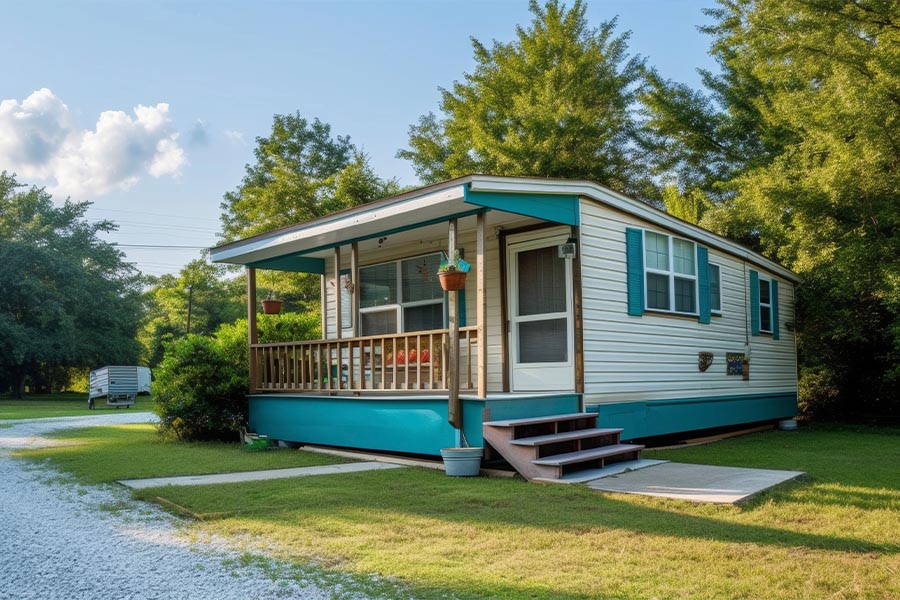
Here’s the honest range, broken down by home type and move type. These numbers reflect real quotes and user-reported costs from 2024–2026, not manufacturer estimates.
| Home type | Transport only (short distance) | Full-service move (<100 miles) | Long-distance / cross-state |
|---|---|---|---|
| Single-wide | $1,000–$3,500 | $5,000–$8,000 | $8,000–$12,000+ |
| Double-wide | $2,000–$5,000 per section | $8,000–$15,000 | $12,000–$20,000+ |
| Triple-wide | $3,500–$7,000 per section | $15,000–$20,000+ | $20,000–$30,000+ |
Please note that prices are estimates for informational purposes and may vary based on individual factors.
These are not worst-case numbers. A double-wide move just 9.8 miles in California came in at $6,500 – well above what most online calculators suggest for that distance. An 8,000-dollar quote for a 5-to-10 mile move in Arkansas wasn’t a ripoff; it was a hard-to-access secondary road site that required specialty equipment.
The point: distance alone does not predict cost. More on why below.
Single-Wide vs. Double-Wide – The Price Gap Is Bigger Than You Think
A single-wide is one piece. It attaches to one truck, gets one set of permits, and needs one pilot car (usually). A double-wide is two sections that travel separately, often with two trucks and two separate permit applications, then get rejoined at the destination.
That’s where the cost multiplies fast. You’re not paying twice for a double-wide, but you’re paying somewhere between 1.5 and 2 times the single-wide rate once you factor in both transport units and the labor to disconnect, separate, transport, rejoin, and re-level two sections.
Triple-wides follow the same logic at an even steeper scale. Some movers won’t touch them at all because the route planning required for three oversized loads gets extremely complicated.
Why the Per-Mile Rate Is Only Part of the Story
You’ll see per-mile rates cited constantly: $4 to $5.50 per mile for the tow truck, plus $1.50 to $1.65 per mile for each required pilot car. On paper, moving a single-wide 60 miles looks like a $400–$500 towing cost. In reality, that math ignores almost everything else.
The route has to be surveyed in advance. If there are low bridges, sharp turns, or weight-restricted roads, the mover may need to take a significantly longer route.
I’ve seen 40-mile straight-line moves turn into 80-mile permitted routes because of bridge clearances. You pay for every mile the truck actually drives, not the shortest path on the map.
Add the permit fee (which varies by state but typically runs $100–$500), one or two required escort vehicles at their per-mile rate, and you can see how a “transport-only” quote of $1,500 becomes a $3,500 actual bill before setup even begins.
If you’re moving a long distance – crossing state lines or moving more than 200 miles – it’s worth reading up on cheapest ways to move cross-country to understand which cost levers actually matter at that scale.
Get matched with the best mover for your needs!
Thank you!
Your movers will contact you shortly.
Transport-Only vs. Full-Service – What Each Actually Covers
This distinction trips people up more than almost anything else. “Transport-only” means the mover connects the home to their truck, hauls it to the new site, and disconnects it. That’s it. The home sits there. Nothing is set up.
Full-service moves typically include utility disconnection at the origin, skirting removal, any required blocking or blocking removal, transport, permits, setup at the destination including re-leveling and re-blocking, and skirting reinstallation. Utility hookups – water, sewer, electric – are almost always separate.
This is where a lot of quotes go sideways. Someone gets a transport-only quote of $2,500, then discovers they need $3,000–$5,000 more in setup, utility connection, and foundation work at the new site. The full-service quote that looked expensive upfront often ends up cheaper once everything’s accounted for.
For the household belongings you’re moving separately, see our guide on renting a truck vs. hiring movers to decide which approach fits your situation.
Ask every mover you call to give you a line-item breakdown. If they won’t, that’s useful information.
The Hidden Costs Most Quotes Leave Out
Even full-service quotes frequently omit these:
- Tree and obstacle removal – If there are trees, power lines, or structures in the path at either site, that’s an additional contractor. One user in Michigan paid $700 for a 22-mile single-wide move but had to arrange tree removal separately before the mover would touch the job.
- Foundation or blocking at the new site – Most movers set the home on temporary blocks. A permanent foundation runs $3,000–$12,000 depending on type (pier, slab, basement).
- Utility hookups – Water, sewer, and electric connections at the new site are contractor work, not included in any moving quote. Budget $2,000–$5,000 separately for this.
- Permit delays – Some counties take 2–4 weeks to issue a transport permit. If your move has a hard deadline, this can cost you in holding fees or missed park lot openings.
- Inspection fees – Florida requires a pre-move inspection for homes older than 3 years. Other states have similar requirements. Factor in $200–$500 for inspections if your state mandates them.
None of these are rare edge cases. They come up routinely. The mover who gives you the cleanest-looking quote is often the one who’s left the most off the sheet.
The Age Rule That Could Make Your Move Impossible

This is probably the most important thing in this article, and it’s the one thing most cost guides completely skip over.
In 1976, HUD established the first federal construction and safety standards for manufactured homes. Homes built before that year – commonly called “pre-HUD homes” – were constructed without those standards. Many are structurally fine. But the regulatory and practical reality is that moving them has become extremely difficult.
Most mobile home parks, particularly newer ones, have age restrictions. Many won’t accept any home more than 15–20 years old. Virtually none will accept a pre-1976 home. The result: even if a pre-HUD home is physically moveable, you may have nowhere to put it.
There’s also a HUD Wind Zone issue that affects post-1976 homes. Every manufactured home is built to a specific wind zone rating – Zone I (interior/low-wind areas), Zone II, or Zone III (coastal/hurricane-prone areas). Federal regulations prohibit moving a home into a higher wind zone than it was built for. A Zone I home cannot legally be placed in a Florida coastal park rated Zone III, regardless of its condition.
Practically speaking: if you’re buying a used mobile home and planning to move it, the HUD data plate inside the home tells you its wind zone rating. Check that it’s compatible with your destination state before you spend anything.
Permits, Escorts, and State Regulations You Can't Skip
Every state requires both a transport permit and a licensed manufactured home mover. Not a general towing company – a specifically licensed mobile home transport contractor.
The distinction matters legally. An unlicensed tow can void your home’s insurance and create liability problems if anything happens during the move.
The permit process generally requires two documents: proof of title (to show you own the home) and a tax certificate (showing no outstanding property taxes on it). Both come from your county. Without them, no permit, no move.
State restrictions vary quite a bit:
- Kentucky limits the combined truck-and-home length to 120 feet, home width to 16 feet, and height to 13 feet 6 inches.
- Missouri requires an oversize load permit for any home wider than 12 feet 4 inches.
- Florida mandates a pre-inspection for homes older than 3 years and generally will not permit pre-1976 homes to move unless it’s a forced relocation (park closure).
- Most states restrict oversize load transport to daytime hours only and prohibit moves on holidays or during high-wind conditions.
The HUD Manufactured Home Construction and Safety Standards were also updated in September 2025 (Fourth and Fifth Sets), which changed certain anchoring and installation requirements.
If you’re moving a home post-September 2025, verify the destination site’s requirements reflect the current standards, not the older ones.
When evaluating movers, it’s worth taking a few minutes to verify their USDOT number through the FMCSA database before signing anything. A licensed mobile home mover should be able to provide this without hesitation.
How to Actually Get a Fair Quote
Get at least three bids. Not two – three. Mobile home moving quotes vary more than almost any other type of move I’ve seen. The highest and lowest bids for the same job are sometimes $4,000–$5,000 apart.
Before calling anyone, gather:
- Your home’s year, make, width, and length (on the HUD data plate or title)
- The distance from current to new site, plus Google Maps photos of both driveways/access points
- Whether you need full-service or transport-only
- Whether utilities need disconnecting at origin
When you talk to movers, ask specifically: what is included and what is not included in this quote? Ask about permits (are they included or billed separately?), about pilot car fees, and about what happens if the route requires a detour. Get the scope in writing.
Understanding the difference between working with a licensed moving company vs. a broker also matters here. Some “mobile home movers” are actually brokers who subcontract the work, which adds a layer of markup and can complicate accountability if something goes wrong.
Can You Move a Mobile Home for Free?
It does happen, but it’s rare and usually involves specific circumstances. The two most common scenarios:
Some mobile home parks will cover relocation costs for residents when the park is closing, under state-mandated relocation assistance programs. Florida, California, and Oregon have relatively strong tenant protections in this area. If your park is shutting down, check your state’s mobile home park closure laws before accepting a cash buyout – you may be entitled to free relocation assistance instead.
The second scenario: donating the home to a nonprofit or giving it away in exchange for the buyer paying moving costs.
This sounds appealing but works only if the home is in good condition and the recipient is taking it to a destination that will actually accept it. Most people who try this route end up with a home that’s too old or in too poor condition to attract any takers willing to absorb transport costs.
Realistically, if the home is moveable and in decent shape, you’re paying for the move. A free or near-free mobile home relocation is the exception, not something to plan around.
Find the perfect mover to fit your needs – get your free instant moving quote now!
877-792-7972What the Move Looks Like Compared to Buying New – An Honest Comparison
I want to address something most cost guides avoid. If you’re moving an older mobile home, particularly one that’s 20+ years old, run the math before committing to the move. This decision often intersects with a broader process of downsizing – especially for older homeowners deciding what to bring versus leave behind.
According to the U.S. Census Bureau’s Manufactured Housing Survey, the average sales price of a new single-section manufactured home was around $90,000–$100,000 nationally in 2024, with regional variation (much higher in the West, lower in the South). A new double-section runs $130,000–$180,000 depending on size and features.
Moving an older home costs $5,000–$15,000 in transport alone, plus setup, utility hookups, and often repairs needed to pass inspection at the new site.
An older home may also face park age restrictions that limit where it can go. The economics of moving a 25-year-old home start looking questionable when you run a side-by-side.
The move usually makes sense when the home is relatively new (under 15 years), in good condition, and you own land or have a guaranteed lot waiting. It’s harder to justify for older homes with uncertain site acceptance and deferred maintenance already in the queue.
If you’re relocating a conventional household alongside the home, browse our long-distance moving services for guidance on choosing a licensed mover for the household portion.
Frequently Asked Questions
How far can you move a mobile home?
There’s no legal maximum distance for moving a manufactured home, as long as the home is roadworthy and the route can be permitted. In practice, most moves are under 100 miles because long-distance transport costs can approach or exceed the home’s value. Cross-state moves are possible but require permits in every state you pass through. For the household items you’re moving alongside the home, container services like U-Pack can offer a cost-effective option for the furniture and boxes portion of a long-distance move.
What's the oldest mobile home that can be moved?
There’s no universal age cutoff, but pre-1976 homes are extremely difficult to relocate. Most parks won’t accept them, and some counties require additional structural inspections or refuse permits entirely. Even if the move itself is physically possible, finding a legal placement for a pre-HUD home is the harder problem.
How long does moving a mobile home take?
The transport itself usually takes one to three days depending on distance. Permit processing adds two to four weeks in many counties. Setup, utility connection, and any site preparation at the destination can add another one to four weeks. Budget 4–8 weeks total from permit application to move-in ready.
Do mobile homes lose value when moved?
Moving itself doesn’t directly reduce value, but it can cause structural stress, particularly in older homes. Re-leveling after transport is essential – a home that sits off-level for even a short time can develop door and window alignment issues. Budget for a professional re-leveling inspection after every move.
Can I move a mobile home myself without a licensed mover?
No. Every U.S. state requires manufactured homes to be transported by a licensed mobile home mover with the appropriate state transport credentials and liability insurance.
A general towing company or equipment rental does not satisfy this requirement, and attempting an unlicensed move can void insurance, create permit denial, and create civil liability if anything is damaged.
What's the cheapest way to move a mobile home?
Transport-only over a short distance – under 50 miles, to a site with good road access – is the cheapest configuration. Choosing a new site close to the current location, doing your own utility disconnection prep, and timing the move to avoid holiday restrictions can all reduce costs.
Getting quotes from at least three licensed movers is the single most effective cost-control step; the spread between bids can be substantial.
Does homeowner's insurance cover a mobile home during a move?
Standard manufactured home insurance does not typically cover the home while it’s in transit. Your mover should carry their own liability insurance, but this covers their negligence – not every possible damage scenario. Some insurance companies offer a separate transit endorsement. Check with your carrier before the move date.